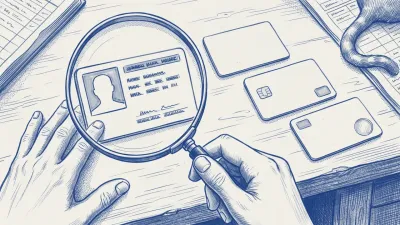


All four acronyms turn up at the same front desk. A guest announces he is giving you his NIE and hands over a card, an accountant asks for the NIF and gets a photo of a DNI, and an EU resident produces a green sheet of paper convinced it is his identity card.
Three separate misunderstandings that end in the same place: a guest report filed with the wrong document type. There is a fairly simple order underneath all of it, it just rarely gets explained in one go.
What is a NIE in Spain?
The NIE is the Número de Identidad de Extranjero, the foreigner identity number. It is a number, not a document: a leading letter (X, Y or Z depending on when it was assigned), seven digits and a check letter1.
It is assigned once and does not expire. You need it for almost any procedure with effects in Spain: opening a bank account, signing an employment contract, buying property, paying tax.
Having a NIE says nothing about your residence status. A non-resident foreigner buying a flat on the coast has a NIE. So does a long-term resident. It is an administrative label, not a permit.
What is a TIE in Spain?
The TIE is the Tarjeta de Identidad de Extranjero, the foreigner identity card. This one is a physical document, credit-card sized, printed with your NIE alongside your photograph, your details and the type of authorisation you hold2.
The current format is the European one, issued since 19 May 2020. The previous format was issued from 1 April 20113.
- 1The support number: one E plus eight digits, top right. The card does not label it; Spanish government forms call it IXESP.
- 2The NIE, next to the word NIE: a letter, seven digits and a check letter. It identifies the person, not the card.
- 3The card’s expiry. A renewed card gets a new support number; the NIE never changes.
Original schematic based on the official specimen, with sample data. PRADO record: ESP-HO-03001
The practical difference from the NIE: the TIE accredits your identity and your residence status at the same time. It is the document you show when someone asks you to identify yourself.
One note on the Spanish article, because you will see both: “el TIE” and “la TIE” are used interchangeably. Since it is a tarjeta, a card, “la TIE” is the usual form.
NIE or NIF: how they differ
The NIF is the Número de Identificación Fiscal, the tax identification number, and the answer here depends on who you are.
If you are Spanish, your NIF is your DNI number. They are the same number under two names: DNI when talking about the document, NIF when talking about your identification to the tax authority.
If you are a foreigner, your NIF is your NIE. There are not two separate numbers: the NIE doubles as the tax identifier.
If you are a company, your NIF starts with a letter (A for public limited companies, B for private limited, and so on)4. It used to be called the CIF, a name that was officially retired in 2008 but is still in everyday use.
In short: NIF is the function, and DNI or NIE are the numbers that perform it depending on the case.
The green NIE: what the EU registration certificate is
If you are an EU citizen residing in Spain for more than three months, you do not get a TIE. You get a certificado de registro de ciudadano de la Unión, which everyone calls the green NIE. It exists as a small green card and, in older versions, as a paper sheet.
And here is the point almost nobody explains properly. According to the Policía Nacional, that certificate accredits registration in the Registro Central de Extranjeros and shows the holder’s name, nationality, address, NIE and registration date5.
What it does not do is identify its holder.
It carries no photograph. It is not an identity document. It proves you are registered in Spain, nothing more. To identify yourself you still need your national identity card or passport from your country of origin.
This surprises plenty of people who have used the certificate as an ID card for years, and quite a few front desks that accept it as identification without a second thought.
If what you are after is where its support number lives6, another classic source of headaches, that is in the NIE support number.
NIE vs TIE in Spain, side by side
| NIE | TIE | EU registration certificate | |
|---|---|---|---|
| What it is | A number | A physical card | A certificate, card or paper |
| Carries a photo | Not applicable | Yes | No |
| Identifies the holder? | Not applicable | Yes | No |
| Who has it | Any foreigner with dealings in Spain | Non-EU foreign residents | EU citizens resident in Spain |
| Does it expire? | No | Yes | Depends on the type |
| Has a support number? | Not applicable | Yes, as IXESP | Yes: on the back if it is a card, on the front if it is the paper version |
Which documents identify their holder and which do not
This is worth getting straight, because it has the most practical consequences.
The DNI, the TIE, a passport and other countries’ national identity cards identify their holder. They carry a photograph and are issued to prove who you are.
The EU registration certificate does not, since it only proves a registration. Neither does the Spanish libro de familia, which proves a family relationship.
And the case people ask about most: a driving licence is not an identity document in Spain. It proves you are authorised to drive. Organic Law 4/2015 reserves the identity role for the DNI, which it defines as the only document with sufficient standalone value to accredit its holder’s identity and personal data for all purposes7. Carrying a photo does not make a licence identification, and there are procedures where it will not be accepted. In daily life plenty of shops and hotels take it without argument, but that is custom, not law.
Which document type to register in SES.HOSPEDAJES
If you manage accommodation in Spain, this is your part. Royal Decree 933/2021 requires you to collect the document type and number for every traveller8, and SES.HOSPEDAJES expects a specific type from a closed list. The web service specification, which the Ministry hands to whoever registers and does not publish on its sede electrónica, is what ties the support number and the second surname to the declared type; the codes themselves are not in it, the service publishes them through its own catalogue operation9.
| What the guest hands you | SES type | Support number? | Second surname? |
|---|---|---|---|
| Spanish DNI | NIF | Yes | Yes |
| TIE (or another document showing a NIE) | NIE | Yes | Yes |
| EU citizen registration certificate | NIE | Yes | Yes |
| Passport, any country | PAS | No | No |
| Another country’s identity card | OTRO | No | No |
One clarification on the middle column before going on: NIF is not a document anybody hands you. It is the code the DNI is declared under, because a Spanish national’s DNI number is also their NIF.
Three consequences worth internalising:
The green certificate has a row of its own because the system accepts it, but do not register it as the guest’s identity document, because it is not one. If they are carrying their national identity card or passport, register that one, which is what identifies them.
If the guest is Spanish, the second surname and the support number are mandatory, and those two fields sink more reports than anything else. We break that down in the DNI support number.
If a foreign guest travels on a passport, there is no support number to ask for and the report is valid all the same.
Minors have their own rules by age band, covered in minors and guest registration. And if a guest shows you their DNI on a phone, it has been valid since April 2026: see MiDNI at check-in.
At RegistroViajero the guest picks their document type and the form asks for exactly the fields that document has, so the table above is resolved by the system rather than by your front desk.
One last thing: how to book a NIE appointment, what fees apply and which papers to bring to the police station are immigration formalities, the ground of the gestorías, Spain’s immigration-paperwork specialists. For that, the Policía Nacional electronic office is the authority10.
Frequently asked questions
Is the NIE the same as the TIE? The NIE and the TIE are not the same thing. The NIE is a number identifying a foreign national. The TIE is the physical card printed with that number alongside a photo and the type of authorisation. You can hold a NIE without holding a TIE.
Is my NIE my NIF? Your NIE is your NIF if you are a foreigner: it doubles as your tax identifier. If you are Spanish, your NIF is your DNI number.
Does the green EU certificate work as an identity document? The green EU certificate does not work as an identity document. It accredits registration in the Registro Central de Extranjeros and shows the NIE, but it carries no photograph and does not identify its holder. A national identity card or passport is still required.
Does a driving licence work as a DNI in Spain? A driving licence does not work as a DNI in Spain: it is not an identity document, it proves authorisation to drive. Many establishments accept it out of habit, but some procedures will not.
Does the NIE expire? The NIE does not expire. What expires is the document carrying it, the TIE or the certificate, depending on its type.
Which document do I register if my guest is an EU citizen? If your guest is an EU citizen, you register their national identity card or passport, since those are the ones that identify. The registration certificate does not serve that purpose.
Sources
-
Tarjeta de identidad de extranjero (Ministerio del Interior). ↩
-
PRADO, records
ESP-HO-03001andESP-HO-02005(Council of the European Union). ↩ -
Certificado de registro de ciudadano de la Unión Europea (Sede Electrónica de la Policía Nacional), accessed 31 July 2026. ↩
-
Royal Decree 933/2021, Annex I, section A) item 3, letters e), f) and g), consolidated text (BOE). ↩
-
Ministerio del Interior, “Interfaz servicios externos: Servicio de Comunicación Hospedajes”, version 3.1.2 of 17 September 2024, section 3.1.1.1, p. 18. ↩
-
Citizen services and procedures (Sede Electrónica de la Policía Nacional), accessed 7 August 2026. ↩