

When someone asks whether their property is housing or lodging, they expect a yes or a no. The answer starts with another question: for the purposes of what.
That mismatch explains a good share of the compliance mistakes that reach our desk. Someone checks that their contract is a seasonal letting, concludes they are on the housing side, and assumes every other obligation falls the same way. They are usually right about three boundaries and wrong about guest registration, which is the one that carries a fine.
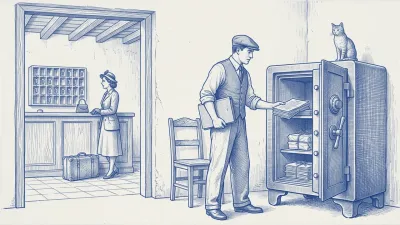
A concrete case: a property that charges per night, with a staffed reception, occupied for nine months by the same resident.
| Boundary | Verdict | Norm that decides | Why |
|---|---|---|---|
| Contractual | Housing | LAU (Ley 29/1994), Articles 2 and 3 | Nine months with the same resident point to a permanent purpose |
| Tax | Lodging | VAT act (Ley 37/1992), Article 20 | A permanently staffed reception is on the Spanish tax agency’s list of hotel services |
| Guest registration | Lodging | RD 933/2021, Article 2.1 | It charges per night: the three elements are present, and duration does not count |
| Administrative | Depends | Regional act and municipal planning | There is no general answer: your community and your municipality set it, address by address |
With the same property and the same contract, two boundaries say lodging, one says housing and the fourth has no general answer. None of them is wrong.
How to tell if your case is housing or lodging
- Read the purpose agreed in the contract. Its duration is only evidence of that purpose. That settles the contractual boundary.
- List the services you provide during the stay, not those at entry and exit. That settles the tax boundary.
- Ask whether what you provide is an overnight stay for a price, or housing. That is the guest-registration test.
- Check your enabling title and land use against your own community’s rules, the only ones that can answer for it.
- If the answers do not point the same way, that is normal. Comply with each boundary separately.
Contractual boundary: which law governs the contract
Spain’s Urban Leases Act, the LAU, is explicit in its Article 2.1:
“A letting of a habitable building whose primary purpose is to satisfy the tenant’s permanent need for housing shall be considered a housing letting.”
The word doing the work is permanent. Lettings “entered into for a season, whether summer or any other” leave that article and go to Article 3.2, use other than housing, alongside business premises.2 They stay inside the act, but under a different regime: what the parties agree comes first, then the rules the LAU itself reserves for lettings that are not housing, and the Civil Code only where neither settles the point. In practice, a seasonal tenant has no right to the mandatory extension that protects a housing tenant: the letting lasts what the contract says.
There is a third level almost nobody mentions. Article 5 removes five cases from the scope of the entire act, and two matter here. Letter e) is the one for tourist dwellings:
“The temporary transfer of use of a whole furnished dwelling, equipped for immediate use, marketed or promoted through tourist offer channels or by any other means of marketing or promotion, and carried out for profit, when it is subject to a specific regime derived from its sectoral tourism legislation.”
The wording is that of Royal Decree-Law 7/2019, in force since 6 March 2019. Falling outside the act altogether means none of it applies, neither its terms nor its deposit rules. The contract is governed by your community’s tourism rules and, for everything else, by the Civil Code.
Note that the requirements are cumulative: whole dwelling, furnished and ready to use, marketed through a tourist channel, for profit and subject to sectoral tourism legislation. If one fails, the letting stays inside the act.
Letter d) of the same article excludes university housing, but only where the university itself owns or runs it, expressly classifies it as such and assigns it to its enrolled students and staff. A private residence does not get through that door.
The test here is the agreed purpose. The calendar only counts as evidence of that purpose. Nine months to a student who goes back to their parents’ home in June is a seasonal letting. Nine months to someone who has moved their life into the flat and has no other home point to housing, whatever the contract says.
Tax boundary: which services take you out of the VAT exemption
The tax office does not look at duration. It looks at whether you provide complementary services typical of the hotel industry. Residential lettings are exempt from VAT, and Spain’s VAT act, Ley 37/1992, carves one case out of that exemption in its Article 20.Uno.23.º, letter e´):
“Lettings of furnished apartments or dwellings where the landlord undertakes to provide any of the complementary services typical of the hotel industry, such as restaurant, cleaning, laundry or similar services.”
Losing the exemption means charging VAT on every invoice, at the reduced 10 % rate the act applies to hospitality services, and filing the VAT returns.5
What is useful is knowing what counts as a hotel service and what does not, and the Spanish tax agency spells it out in two lists.6 These are services typical of the hotel industry, and they take you out of the exemption:
- Permanent, continuous reception and customer service in a space set aside for it.
- Periodic cleaning of the property and the accommodation during the stay.
- Periodic change of bed and bath linen.
- Other services made available to the guest: laundry, luggage storage, newspapers, bookings.
- Meals and catering, where served.
These are not hotel services, and the letting keeps its exemption:
- Cleaning of the apartment only at entry and exit of each tenant.
- Change of linen only at entry and exit.
- Cleaning of the building’s common areas and of the development.
- Technical assistance and maintenance for repairs.
That distinction between cleaning during the stay and cleaning between stays is the criterion most often cited from memory and least often checked. Before deciding on a specific case, look for the binding ruling that fits it in the Dirección General de Tributos case-law database.7
Guest-registration boundary: which activity carries the duty
Royal Decree 933/2021 defines lodging activity in its Article 2.1. The general definition reads:
“Those carried out, professionally or not, for the purpose of providing, in exchange for a price, consideration or compensation, a room or space for overnight stay to persons, with or without other complementary services.”
Three pieces have to come together: a room or space to spend the night, people occupying it, and a price, consideration or compensation in return. There is no time limit in that definition, so the length of the contract does not decide on its own.
The same paragraph closes with a list of activities included “in any event”. Its first letter is the one that matters here: those carried out by “commercial establishments open to the public that form part of this sector under the rules issued by the competent administration”. The norm itself gives hoteles, hostales, pensiones, casas de huéspedes and rural tourism establishments as examples. A pensión or a casa de huéspedes registered as such is inside beyond argument. A flat let on a tenancy agreement is not a commercial establishment open to the public.
Duration and purpose come in through another door: the Ministry of the Interior’s frequently asked questions, version of 9 April 2025. Question 12, on long-duration lettings, answers:
“The Royal Decree shall be applicable whatever its modality and duration, provided it has a purpose other than that of housing.”
The sentence does two things at once. It makes duration irrelevant, so no length of contract takes you out of the decree on its own. And it adds an exclusion the articles do not contain: only what is let as housing stays outside. That criterion lives in a frequently-asked-questions document rather than in the articles, and the Ministry can change it without touching the royal decree.
Administrative boundary: the enabling title
This is the boundary with the most consequences for the business, because without an enabling title there is no business to discuss. And it is the only one of the four with no Spain-wide answer: it is set by seventeen regional tourism acts, two autonomous-city regulations and the urban planning of every municipality.
The competence is regional, and that is exactly why the Supreme Court annulled the single state rental registry in 2026. Its judgment 620/2026 of 19 May found that the State lacked the competence title over this matter.
What changes from one community to another is when a tourism licence or declaration is required, not who has to register guests. The Royal Decree 933/2021 duty is national and uniform, and does not depend on your community classifying the activity as touristic. A property can fall outside its region’s tourism act and still be inside the royal decree. The only real regional variation is the channel: Catalonia transmits to the Mossos d’Esquadra and the Basque Country to the Ertzaintza.
Which test each autonomous community uses
The table below sets out, territory by territory, which test each regional tourism regime uses to decide whether a dwelling falls inside it. It covers eighteen territories: all but Melilla. The Norm column says which article each row comes from and links to the gazette that published it.
In the threshold column:
- Excludes: from that duration on you are no longer touristic for that community.
- Triggers: from that figure on you are presumed to be.
- Definitional: the duration is part of the definition of the figure itself.
| Community | What decides | Threshold, and what it does | By the room | Norm |
|---|---|---|---|---|
| Andalusia | Price, habituality and tourist purpose; advertising on a tourist channel makes tourist purpose presumed | More than 2 months to the same tenant, excludes | Allowed with the holder registered and resident | Decreto 28/2016, arts. 1.2, 3.1 and 5.310 |
| Aragón | Advertising on a tourist channel or letting for a month or less; either one is enough | 1 month or less, triggers | Prohibited: the letting has to be of the whole unit | Decreto 1/2023, arts. 3 and 4.311 |
| Asturias | Habituality from the first letting of the year; the vivienda de uso turístico has to provide services | 4 continuous months, excludes | Prohibited in both figures | Decreto 48/2016, arts. 1, 3, 4 and 121213 |
| Balearic Islands | Several requirements at once; with short stays it is presumed touristic unless you prove otherwise | 30 nights per stay, definitional. 60 days a year at most in the main-home modality | Incompatible with the figure | Ley 8/2012, arts. 50 and 5114 |
| Canary Islands | Two or more lettings a year; today the planning gate decides first | None | Contemplated: the act counts letting by the room as lodging use | Decreto 113/2015, art. 215 and Ley 6/2025, art. 2.916 |
| Cantabria | Advertising on a tourist channel, and nothing else | None | Allowed in the shared modality, with the owner living there | Decreto 50/2025, arts. 1.2 and 317 |
| Castilla-La Mancha | Tourist channel plus two or more lettings a year | None | Outside the figure by express exclusion | Decreto 36/2018, arts. 1.2 and 218 |
| Castilla y León | Habituality measured in time, not in number of lettings, with a cap per stay | More than 1 month accumulated per year, triggers. More than 2 continuous months to the same tourist, excludes | Allowed: the provision that prohibited it was annulled in court | Decreto 3/2017, arts. 2.d), 3.2 and 4.c)19 and a Supreme Court ruling20 |
| Catalonia | Duration alone: a single short letting is enough | 31 days or less, definitional | Prohibited in the HUT, only via the llar compartida figure | Decret 75/2020, arts. 221-1 and 241-121 |
| Valencia | Short duration plus presumption by channel; services do not count | 10 days or less, definitional. The shortest in Spain | Expressly prohibited | Ley 15/2018, art. 6522 |
| Extremadura | The marketing channel alone; habituality was removed in 2018 | None | Outside the figure: requires letting the whole unit | Ley 2/2011, art. 6123 |
| Galicia | Habituality and duration together; advertising is not enough | Fewer than 30 consecutive days, definitional | Prohibited: the letting is of the whole dwelling | Decreto 12/2017, arts. 4.2 and 524 |
| La Rioja | Several requirements at once, without habituality; non-professional managers allowed | A single period of 3 months or less a year, excludes, even if the dwelling sits empty the rest of the year | Not prohibited, redirected to the guesthouse regime | Decreto 10/2017, art. 662526 |
| Madrid | You are habitual from the moment you file the responsible declaration and advertise | None | Outside the figure: requires letting the whole unit | Decreto 79/2014, art. 227 |
| Murcia | Tourist channel plus habituality: advertising presumes it, and without advertising two bookings a year count | None | Own modality, with a registered resident operator | Decreto 256/2019, arts. 2 and 5.228 |
| Navarre | Tourist channel; advertising makes habituality presumed | None | Outside the regulation by express exclusion | Ley Foral 7/2003, arts. 12.3 and 22.229 and Decreto Foral 230/2011, art. 2.230 |
| Basque Country | Presumed touristic unless you prove it is an LAU tenancy | 31 days or less two or more times a year, triggers | Allowed as its own figure, maximum 8 places | Ley 13/2016, arts. 53 and 5431 and Decreto 101/2018, art. 13.332 |
| Ceuta | Advertising makes habituality presumed; the norm never mentions the LAU | More than 1 month accumulated per year on two or more occasions, triggers | Not regulated | Reglamento de Turismo, art. 74.233 |
Three patterns that recur across the regional acts
Put side by side, three things recur:
- The marketing channel is the most widespread test, ahead of duration. It presumes different things: advertising is enough in Aragón and the Basque Country; in Galicia it proves nothing, because there the channel follows from being touristic, not the reverse.
- The same figure does opposite jobs. “One month” in Aragón presumes tourist activity; “one month” in Castilla y León marks the floor below which there is none. Moving a threshold between communities inverts the meaning of the rule.
- Hotel services are almost never the test. They only count in Asturias, which separates vivienda de uso turístico from vacacional, and in the Balearics, which requires cleaning, bed linen and maintenance.1214 Valencia has expressly ruled them out since 2024.22
The practical consequence is sharpest as an example: a family letting their flat three weeks a year is outside the tourism regime in Castilla y León and inside it in Asturias, with identical behaviour.
Land use decides before the tourism definition does
Land use is the axis that moves fastest. In four communities it decides more cases than the tourism definition, because a dwelling that fits the definition may still be unable to operate.
- Canary Islands. Ley 6/2025 requires municipal planning to reserve at least 90 % of residential buildability for exclusively residential use: sitting on residential land is no longer enough, the plan has to enable tourist use.16
- Catalonia. Requires prior planning permission in 262 municipalities.
- Balearic Islands. Tourist stays may only be marketed inside the zones designated as suitable by planning.14
- Basque Country. Since 30 December 2025, declaring a stressed residential market zone automatically suspends the activity of new tourist-use dwellings and rooms and blocks their entry in the tourism registry.34
Five of these norms are from 2025 or 2026 and several carry adaptation deadlines falling within 2026. The thresholds are those in force on 14 August 2026, so the date is part of the datum. Check your own community before deciding anything, and the breakdown of registries and procedures is in tourist licence in Spain by region.
Two cases where the boundaries do not coincide
These are the two cases that generate the most queries. In the first the boundaries never reach a settled answer; in the second they all move at once halfway through the year.
A flat let by the room to students
Here the honest answer is that there is no settled answer.
Contractually, the LAU is silent on letting by the room, and three readings compete: a housing letting under Article 2, a use other than housing under Article 3, or outside the act and governed by the Civil Code. There is no Supreme Court doctrine to rank them, and one textual detail feeds the debate: Article 2.1 says “habitable building” and Article 3.1 only “building”.
On guest registration it is worse: there is no direct source. The Ministry’s FAQ never mentions letting by the room, and the two passages that come closest pull in opposite directions.9
- Inwards pulls question 13, on hosting someone in your own home for a price: “Yes. Registering guest data is mandatory for all types of lodging establishments in Spanish territory”.
- Outwards pull the purpose test in question 12 and the definition in Article 2.1 itself: a room let as housing is not an overnight stay for a price.
Nobody has publicly reconciled the two for a room let to a long-term tenant.
On what is published today, a room letting with a housing purpose and no services during the stay falls outside. That is a reasoned reading of Article 2.1, not a criterion the administration has published for this case. If your operation moves towards charging per night or providing hotel-type services, the reading weakens fast.
A university hall that opens in summer
This is the clean case, and the only one where the three boundaries with closed sources (contractual, tax and guest registration) all move together.
From September to June it runs on residential logic. The LAU has its own exit for this in Article 5.d), but only for housing the university itself owns or runs, classifies as university housing and assigns to its students and staff. A private residence stays inside the LAU.3
The Ministry’s criterion is in question 15, which answers in two parts. The first:
“These entities would fall outside the scope of RD 933/2021, since their purpose is to serve as housing for their guests.”
It says so with a conditional (“would”), which is not a categorical exclusion. And the second part is the exception that moves the case in summer: “when this type of property is used in a manner similar to a hotel or hostel (even temporarily, during holiday seasons), it is subject to the obligations set out in the Royal Decree”.
The same entity crosses the boundary mid-year without changing building or licence. And if it runs on hotel logic, the tax boundary moves with it.
Watch the vocabulary: the criterion says university halls of residence and colegios mayores, and a private “student residence” may be neither. If your property does not fit those categories, do not assume the criterion covers you.
Deadlines and penalties if your case is lodging
The duty starts with the first booking, and the deadline has two starting moments, each with its own 24 hours:
“This communication shall be made immediately, and in any event within no more than 24 hours, respectively, from the following moments: a) On making the reservation or formalising the contract or, where applicable, its cancellation. b) On the start of the contracted services.”
Article 8 sets no fines: it refers to Chapter V of Organic Law 4/2015 and only classifies, with omitting the report as a serious offence and filing it late as a minor one.36 The amounts come from the Organic Law:37
- Serious offence, not reporting: 601 to 30,000 euros. The fine is imposed at the minimum degree, 601 to 10,400 euros, unless an aggravating circumstance applies.38
- Minor offence, reporting late: 100 to 600 euros.
In a paperwork breach, our reading is that only repeat offending declared by a final decision within two years can raise that degree. Degrees, aggravating circumstances and limitation periods are covered in penalties for not filing the guest report.
At RegistroViajero we automate the communication to SES.HOSPEDAJES, except in Catalonia and the Basque Country, where the channel is regional and follows its own procedure.
And if your case falls on the housing side, the conclusion is just as concrete: you do not have this duty, and no reform of the Urban Leases Act can create it, because guest registration lives in a different norm.
The contractual and tax boundaries in this article were worked out with the team at homming, management software for long and mid-term residential lettings in Spain. Their ground is seasonal contracts versus main-home tenancies, deposits and additional guarantees, digital signature, rent collection and letting by the room under the Urban Leases Act. The guest-registration boundary and the reading of Royal Decree 933/2021 are RegistroViajero’s own analysis.
Frequently asked questions
What is the difference between housing and lodging in Spain? The difference between housing and lodging in Spain is not one line but four separate tests that can give different answers about the same property. The four: the purpose agreed in the contract for the LAU, the services provided during the stay for the tax office, the purpose of the occupation for the guest-registration duty, and the enabling title for your autonomous community.
Does the length of the contract decide whether it is lodging? The length of the contract does not decide whether it is lodging for guest-registration purposes: Royal Decree 933/2021 contains no time limit in its definition. It can decide the question for your autonomous community, where most communities set some threshold, and contractually, where Spain’s Urban Leases Act separates permanent purpose from seasonal.
Does a nine-month contract require guest registration? A nine-month contract requires guest registration if what is provided is lodging, and does not if what is transferred is housing. The criterion published by the Ministry of the Interior is purpose, so the answer depends on what you provide rather than on how long the contract runs.
Can I be outside my region’s tourism act and inside the guest-registration duty? Yes, you can be outside your region’s tourism act and inside the guest-registration duty, because they are independent regimes. The Royal Decree 933/2021 duty is national and uniform, and does not depend on your community classifying the activity as touristic.
This article is for information purposes and does not replace professional legal advice. The regional tests in the table reflect the norms in force on 14 August 2026, and several of them carry adaptation deadlines falling within 2026: always confirm the detail with your community’s official gazette, with its tourism registry and with your municipality.
Sources
-
Ley 29/1994, on Urban Tenancies, Article 2, consolidated text (BOE). ↩
-
Ley 29/1994, on Urban Tenancies, Article 3, consolidated text (BOE). ↩
-
Ley 29/1994, on Urban Tenancies, Article 5, consolidated text (BOE). ↩ ↩2
-
Ley 37/1992, on Value Added Tax, Article 20.Uno.23.º, letter e´), consolidated text (BOE). ↩
-
Ley 37/1992, on Value Added Tax, Article 91.Uno.2.2.º, consolidated text (BOE). ↩
-
Alquilo un apartamento turístico, ¿tengo que ingresar IVA? (Agencia Tributaria, electronic office, in Spanish), accessed 14 August 2026. ↩
-
Doctrina tributaria, binding-ruling search of the Dirección General de Tributos (Ministerio de Hacienda, in Spanish), accessed 14 August 2026. ↩
-
Real Decreto 933/2021, Article 2, consolidated text (BOE). ↩
-
Frequently asked questions on lodging and vehicle rental, version of 9 April 2025 (Ministry of the Interior). ↩ ↩2 ↩3
-
Decreto 31/2024, de 29 de enero, amending Decreto 28/2016 on viviendas con fines turísticos, BOJA no. 24 of 2 February 2024 (Junta de Andalucía), accessed 14 August 2026. ↩
-
Decreto 1/2023, de 11 de enero, Regulation on viviendas de uso turístico in Aragón, BOA no. 11 of 18 January 2023 (Gobierno de Aragón), accessed 14 August 2026. ↩
-
Decreto 48/2016, de 10 de agosto, on viviendas vacacionales and viviendas de uso turístico, BOPA no. 191 of 17 August 2016 (Principado de Asturias), accessed 14 August 2026. ↩ ↩2
-
Decreto 4/2026, de 2 de febrero, amending Decreto 48/2016, BOPA no. 28 of 11 February 2026 (Principado de Asturias), accessed 14 August 2026. ↩
-
Ley 8/2012, de 19 de julio, del Turismo de les Illes Balears, Articles 50 and 51, consolidated text (BOE), accessed 14 August 2026. ↩ ↩2 ↩3
-
Decreto 113/2015, de 22 de mayo, Regulation on viviendas vacacionales, Article 2.c), BOC no. 101 of 28 May 2015 (Gobierno de Canarias), accessed 14 August 2026. ↩
-
Ley 6/2025, de 10 de diciembre, de Ordenación Sostenible del Uso Turístico de Viviendas, Articles 2.9 and 4.1 (Canary Islands, as published in the BOE). ↩ ↩2
-
Decreto 50/2025, de 24 de julio, on viviendas de uso turístico in Cantabria, BOC extraordinary no. 15 of 24 July 2025 (Gobierno de Cantabria), accessed 14 August 2026. ↩
-
Decreto 36/2018, de 29 de mayo, on apartamentos turísticos and viviendas de uso turístico in Castilla-La Mancha, DOCM no. 113 of 11 June 2018, accessed 14 August 2026. ↩
-
Decreto 3/2017, de 16 de febrero, on viviendas de uso turístico in Castilla y León, BOCYL no. 33 of 17 February 2017 (Junta de Castilla y León), accessed 14 August 2026. ↩
-
El Tribunal Supremo avala el decreto de viviendas de uso turístico de Castilla y León, note of 1 October 2019 (CGPJ, in Spanish), accessed 14 August 2026. ↩
-
Decret 75/2020, de 4 d’agost, de turisme de Catalunya, Articles 221-1 and 241-1, DOGC no. 8195 of 6 August 2020 (Generalitat de Catalunya), accessed 14 August 2026. ↩
-
Ley 15/2018, de 7 de junio, on tourism, leisure and hospitality of the Comunitat Valenciana, Article 65, consolidated text (BOE), accessed 14 August 2026. ↩ ↩2
-
Ley 2/2011, de 31 de enero, on the development and modernisation of tourism in Extremadura, Article 61, consolidated text (BOE), accessed 14 August 2026. ↩
-
Decreto 12/2017, de 26 de enero, on viviendas turísticas and viviendas de uso turístico in Galicia, DOG no. 29 of 10 February 2017 (Xunta de Galicia), accessed 14 August 2026. ↩
-
Decreto 10/2017, de 17 de marzo, General Tourism Regulation of La Rioja, Article 66, BOR no. 34 of 22 March 2017, accessed 14 August 2026. ↩
-
Decreto 40/2018, de 23 de noviembre, amending the General Tourism Regulation of La Rioja, paragraph eighteen, BOR no. 141 of 30 November 2018, accessed 14 August 2026. ↩
-
Decreto 27/2026, de 25 de marzo, amending Decreto 79/2014 on viviendas de uso turístico, BOCM no. 80 of 6 April 2026 (Comunidad de Madrid), accessed 14 August 2026. ↩
-
Decreto 256/2019, de 10 de octubre, on viviendas de uso turístico in the Region of Murcia, BORM no. 242 of 19 October 2019, accessed 14 August 2026. ↩
-
Ley 13/2016, de 28 de julio, on Tourism (Basque Country), Articles 53 and 54, consolidated text (BOE), accessed 14 August 2026. ↩
-
Decreto 101/2018, de 3 de julio, on dwellings and rooms for tourist use, Article 13.3, BOPV no. 143 of 26 July 2018 (Basque Country), accessed 14 August 2026. ↩
-
Reglamento de Turismo of the Autonomous City of Ceuta, of 30 November 2010, Article 74.2 (Ciudad Autónoma de Ceuta), accessed 14 August 2026. ↩
-
Ley 6/2025, de 11 de diciembre, de Medidas Urgentes en materia de Vivienda, Suelo y Urbanismo, Article 7 (Basque Country, as published in the BOE). ↩
-
Real Decreto 933/2021, Article 6.3, consolidated text (BOE). ↩
-
Real Decreto 933/2021, Article 8, consolidated text (BOE). ↩
-
Ley Orgánica 4/2015, Article 39.1, consolidated text (BOE). ↩
-
Ley Orgánica 4/2015, Article 33.2, consolidated text (BOE). ↩