

Cantabria rewrote its holiday-home rules entirely in July 2025 and repealed the 2019 decree that governed them. With the new rule came an adaptation period for what was already registered, and that period ran out months ago.
What makes it relevant seven months later is not the deadline itself but what the rule says happens when it is missed, and it is not a fine: it is a decision that voids the declaration already filed, ceases the activity and cancels the registry entry. Anyone who opened before July 2025 and filed nothing is still advertising under a number the administration may be processing for cancellation.
The decree’s other change is quieter and affects anyone starting now: three of the documents you must hold before declaring depend on third parties, and one of them, the municipal urban-compatibility report, is what really sets the pace of the procedure.
Which rules govern a holiday home in Cantabria
Decreto 50/2025, of 24 July, is the rule in force. It was published in a special gazette on that same 24 July, entered into force the following day and repealed Decreto 225/2019, which had governed the matter until then1. Above it sits Ley 5/1999 on tourism in Cantabria, which supplies the register, the classification of offences and the amounts.
The decree’s own preamble explains the shift: the 2019 text was built around “turismo colaborativo ejercido por un particular con ánimo de lucro”, collaborative tourism by an individual seeking profit, and that premise dissolved until the Tribunal Supremo characterised the activity differently. The 2025 decree treats it as an economic accommodation activity, with everything that brings.
Cesión completa and cesión compartida are different categories
Article 3 splits the category in two, and the difference is not one of size but of who may operate:
| Cesión completa | Cesión compartida | |
|---|---|---|
| What is let | The whole dwelling, immediately available | Rooms, furnished and equipped, with use of the bathroom |
| Letting by the room | Not allowed | This is the category for it |
| Who may hold it | Natural or legal person | Natural persons only |
| Owner’s residence | Not required | The owner must live in the dwelling |
| Extra document | None | Municipal certificado de convivencia evidencing residence and the number of occupants |
The practical consequence is that a company cannot let by the room in Cantabria, and an individual who does must live there and prove it with a certificate from the town hall.
The adaptation deadline expired on 25 March 2026
This is the most urgent part of the decree and the first thing to check if the home was already registered. The sole transitional provision splits existing homes into two groups by one date, 3 April 2025, and imposes one duty on both.
The split by date decides one requirement, the hardest to obtain:
- Definitively registered, or with a declaración responsable filed before 3 April 2025 and still under verification: the new decree applies except article 6.1.d), meaning they are free of the community of owners’ prior approval.
- Declaration filed after 3 April 2025 and still under verification: the whole rule applies, community approval included.
The common duty is the one with a deadline: filing, within eight months of entry into force, the annex V declaración responsable of adaptation to the decree. Eight months from 25 July 2025 is 25 March 2026.
What the rule provides for anyone who did not file deserves reading in full, because it is not a penalty and does not behave like one:
“De no presentar dicha declaración en plazo se presumirá que no reúnen los requisitos exigidos en este Decreto, dictándose resolución por la que se deja sin efecto la declaración presentada, se cesa en la actividad y se cancela la correspondiente inscripción en el citado registro, previo procedimiento seguido al efecto cuyo plazo de tramitación y notificación será de 12 meses.”
Three things in that sentence change how to act. The first is that the consequence is registry-based, not financial: there is no fine attached to missing the deadline, there is loss of the entry. The second is that it is not automatic: it requires a prior procedure, with its processing and notification, and that procedure has twelve months. The third is the presumption: the rule does not accuse you of breaching, it presumes you do not comply, which puts the burden of showing otherwise on the holder.
If this is your situation, the step is to approach the Dirección General de Turismo y Hostelería before it approaches you, and to file annex V even though the deadline has passed. The entry stays live until a decision cancels it.
There is a safety net, and it covers only those who moved in time. On 20 March 2026, five days before the deadline fell, the Dirección General de Turismo y Hostelería published interpretative instructions on that transitional provision2. They do not extend the deadline: what they do is hold back cancellation where the delay is not yours. In three situations the entry will not be cancelled:
- Where you applied before 25 March 2026 for the municipal urban-compatibility report and the town hall has still not issued it.
- Where the report was issued and is under appeal, administrative or judicial, pending resolution.
- Where, having applied for registration between 3 April and 24 July 2025 for a dwelling under propiedad horizontal, you approached the community of owners and the agreement or the certificate is still pending.
The two conditions that make them work are the most often missed: you must evidence to the Dirección General that those reports or documents were applied for, and you must file them into the case as soon as they are issued. Having asked and then waited in silence is not enough.
The instructions are interpretative and say so themselves: they do not alter, modify or suspend the decree’s regime, and they apply without prejudice to the Dirección General’s own powers of verification and inspection. In plain terms: if you applied for nothing before 25 March, they do not shield you.
Requirements for a holiday home in Cantabria
Article 6.1 calls them “de carácter esencial”, essential in nature, and that label matters: an essential inaccuracy in the declaration is a very serious offence under article 58.1 of Ley 5/1999. All of this must be held before filing, even though it is not attached:
- Sufficient legal title evidencing ownership or a right of use over the property.
- A tourist-use compatibility report against the municipality’s urban planning, issued by the competent municipal body.
- A competent technician’s certificate of the dwelling’s minimum-programme conditions, also stating its accommodation capacity.
- Prior approval by the community of owners, under the Ley de Propiedad Horizontal, where the building is under that regime.
- A municipal certificado de convivencia, only for cesión compartida, evidencing the owner’s residence and the number of occupants.
- A declaration that the dwelling is not classed as protected housing.
- Safety equipment, the item with the most detail of its own.
Of the seven, the first three set the calendar, because they depend on a town hall, a technician and, under propiedad horizontal, a owners’ meeting. The municipal compatibility report is the decree’s novelty against the 2019 text, which checked it after the declaration rather than before, and it is the slowest to arrive.
Cantabria requires a noise-monitoring system in the living rooms
Article 6.1.g) looks nothing like what the neighbouring regions ask for. It requires three items, and the third is uncommon:
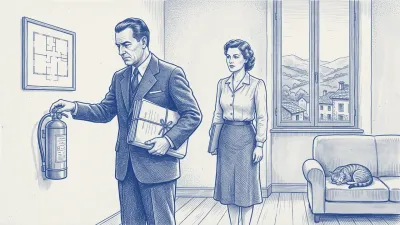
- One fire extinguisher per floor, installed somewhere visible and easy to reach.
- A smoke detector near the kitchen.
- A noise-monitoring system installed in the living rooms, allowing external monitoring of the noise level, alerting the holder to any excess by the users, and placing on record both that the limits were exceeded and that the holder was notified.
The last condition defines which device qualifies: measuring and alerting is not enough, the system has to log that the limit was passed and that notice was given. A sensor that only pushes a notification and keeps no history does not meet the item as drafted.
The register enters you ex officio, and does so preventively
Registration is not applied for. Once the declaración responsable is filed, article 6.2 permits the activity from the day of filing and the Dirección General enters the home ex officio in the Registro General de Empresas Turísticas de Cantabria. The entry is born with a label worth understanding:
“Esta inscripción tendrá carácter preventivo, a resultas de la labor de control e inspección a posteriori realizada por dicha Dirección General.”
Preventive means the number exists and may be published, but verification is pending. The decree adds two further effects: the Dirección General periodically forwards the declarations filed to the town hall of the municipality where the home sits (article 6.3), and the entry does not exempt you from registering in other registers required by Spanish or European rules (article 6.2 in fine).
Cantabria publishes no public search tool for registered homes. What the Turismo de Cantabria professional portal offers is a lookup of establishments registered in your own name, not a directory for verifying someone else’s.
What it costs: 40.72 euros to register, nothing to close
Cantabria does charge, unlike Asturias or the Basque Country. The fees published on the procedure sheet are these3:
| Procedure | Fee |
|---|---|
| Start of activity, tourist accommodation up to 20 units | €40.72 |
| Start of activity, tourist accommodation over 20 units | €48.87 |
| Change of holder and/or trade name | €6.12 |
| Cessation of activity | None listed |
A holiday home always falls in the first row. On top of that comes the fee in article 7.p), which obliges the holder to pay for the issuing of the inspection and control report on the declaración responsable, under its own governing rules.
Town halls may cap how many homes there are per building or zone
Article 4.2 recognises a municipal power worth checking before buying: for overriding reasons of general interest, municipalities may set limits on the maximum number of holiday homes per building, sector, area, period or zone, or any other measure within their competence, through their planning instruments. The rule sets one control on them: those limits must follow criteria that are “claros, inequívocos y objetivos”, clear, unequivocal and objective.
The decree does not list which municipalities have done so. That is checked in each town hall’s planning, and it is the question to ask before any other if the home is in Santander or on the coast.
The hoja de admisión is signed on arrival and kept for a year
Cantabria requires a per-stay document, signed by the guest at the moment of entry. Article 8.1 calls it the hoja de admisión and sets its minimum content: the name of the dwelling’s holder, the registry number, the contact telephone, the dates, the total price and the persons.
Two other receipts sit around it and do not replace it: the booking receipt of article 8.5 and the payment receipt for the accommodation under article 7.g), which must be issued and handed over.
The retention period is in article 7.i), and its wording draws a line many people blur:
“Conservar las hojas de admisión a disposición de la Dirección General competente en materia de turismo durante un periodo mínimo de un año, sin perjuicio de las obligaciones sobre registro de viajeros previstas en la normativa sectorial.”
“Sin perjuicio de las obligaciones sobre registro de viajeros”, without prejudice to the traveller-registration duties, is the Cantabrian rule itself saying that the hoja de admisión and the parte de viajeros are different things, with different recipients and different periods. One year for the first, to the Dirección General de Turismo; three years for the second, to the Ministerio del Interior.
Leaving it out has an offence of its own in the law: article 56.9 of Ley 5/1999 classes as minor “la no realización u omisión de la entrega a los clientes de los establecimientos turísticos de alojamiento de la preceptiva hoja de admisión”, failing to hand the required hoja de admisión to guests, with a fine of 250 to 1,500 euros4.
Fines in Cantabria: up to 75,000 euros since 2025
The amounts multiplied at the start of 2025. Ley de Cantabria 3/2024, of 23 December, raised all three bands by 150% with effect from 1 January 20255:
| Class | Fine | Other sanctions |
|---|---|---|
| Minor | €250 to €1,500 | Warning |
| Serious | €1,501 to €15,000 | Suspension or closure up to 3 months |
| Very serious | €15,001 to €75,000 | Suspension or closure up to 3 years, and disqualification for up to 3 years from receiving grants |
What places conduct in the top band is in article 58, and two of its items bear directly on a holiday home. The first is operating without having declared:
“La oferta de prestación de servicios y/o realización de actividades turísticas, sin haber realizado la declaración responsable o existiendo inexactitudes, falsedades u omisiones de carácter esencial en la misma o en la documentación que se acompañe.”
The second reaches whoever publishes the listing, and its current wording comes from Ley 3/2023:
“La comercialización, la intermediación, la oferta, la publicidad o la facilitación mediante enlace o búsquedas de estancias, actividades o servicios turísticos reglamentados no inscritos en el Registro General de Empresas Turísticas de Cantabria.”
Further down, article 57.21 classes as serious the marketing or advertising of regulated tourist services without displaying the registry number. In short: advertising while unregistered is very serious, and advertising while registered but without the number is serious.
Offences lapse after three years for very serious, two for serious and one for minor, counted from the day they were committed. The case file, in turn, lapses if the decision is not notified within one year of the order opening it, and if you admit liability or pay voluntarily before the decision, the proposed fine is reduced by at least 30%, in exchange for waiving any administrative appeal against it7.
How to deregister a holiday home in Cantabria
Closing is communicated, and it is one of the holder’s duties, not an optional step. Article 7.d) groups it with modifications and adds the registry effect at the end:
“Comunicar por escrito a la Dirección General competente en materia de turismo el cese de la actividad, así como cualquier modificación que afecte a los datos o manifestaciones presentados al inicio de la actividad, en el plazo de quince días a contar desde el siguiente a que se produzca dicha circunstancia, mediante modelo normalizado del Anexo IV. En el caso de cese, se procederá de oficio a cancelar la inscripción registral correspondiente.”
The operative detail:
- What you file. The standard form in annex IV, which is the same form for a closure and for a change of capacity or other data.
- With whom. The Dirección General de Turismo y Hostelería, electronically or in person.
- What it costs. Nothing: the closure does not appear among the procedure’s fees.
- What happens next. Cancellation of the entry is carried out ex officio, with no separate request.
- What happens if you do not report it. Failing to notify the closure within the set period is a minor offence under article 56.6 of Ley 5/1999, 250 to 1,500 euros4.
One thing has to be said about the deadline, because the official sources do not agree. Article 7.d) of the decree sets fifteen days from the following day. The effects section of annex IV of the same decree says a closure is communicated “en el plazo máximo de un mes”, within one month at most, and reserves the fifteen working days for modifications. And the procedure sheet on the electronic office sets no deadline: its filing-period section reads “cese, cuando termine la actividad por voluntad del titular”, on the holder’s own decision to end the activity3. The articles prevail over their own annex and over an information sheet, so the binding deadline is the fifteen days: file inside that window and keep the receipt with its date and entry-register number.
What a registry closure does not close, which is a fair amount, is in how to close a holiday rental in Spain.
Frequently asked questions
Do you need a tourist licence in Cantabria? You do not need a tourist licence in Cantabria: you file a declaración responsable de apertura under annex I of Decreto 50/2025 with the Dirección General de Turismo y Hostelería, and you may carry on the activity from the day you file. Entry in the Registro General de Empresas Turísticas is made ex officio and has preventive status, subject to later control.
How much does it cost to register a holiday home in Cantabria? Registering a holiday home in Cantabria costs 40.72 euros, the start-of-activity fee for tourist accommodation of up to 20 units, according to the procedure sheet on Cantabria’s electronic office. A change of holder costs 6.12 euros and a closure carries no fee. On top of the opening fee comes the charge for the inspection and control report required by article 7.p).
What happens if I did not file annex V before 25 March 2026? If you did not file annex V before 25 March 2026, the sole transitional provision presumes the home does not meet the requirements of Decreto 50/2025, and provides for a decision voiding the declaration, ceasing the activity and cancelling the registry entry. It is not automatic: it requires a prior procedure with a processing and notification period of twelve months, and the entry remains in force until that decision is issued.
Can you let rooms in a holiday home in Cantabria? You can let rooms in Cantabria only under the cesión compartida category, which only natural persons may operate and which requires the owner to live in the dwelling, evidenced by a municipal certificado de convivencia. Under the cesión completa category the rule expressly prohibits letting by the room.
Is a noise sensor required in a Cantabrian holiday home? A noise sensor is required in a Cantabrian holiday home: article 6.1.g) of Decreto 50/2025 demands a noise-monitoring system in the living rooms that allows external monitoring of the level, alerts the holder to an excess, and records both that the limits were exceeded and that notice was given. It comes on top of one extinguisher per floor and a smoke detector near the kitchen.
What is the fine for renting without a declaración responsable in Cantabria? The fine for renting without a declaración responsable in Cantabria runs from 15,001 to 75,000 euros, because article 58.1 of Ley 5/1999 classes the conduct as very serious, and the amounts rose by 150% on 1 January 2025. It may be accompanied by suspension of the activity or closure for up to three years. Advertising unregistered accommodation is also very serious, under article 58.8.
The Cantabrian decree itself points you to the parte de viajeros
There is no need to infer it from the division of powers: article 6.4 of Decreto 50/2025 says that complying with the declaración responsable does not exempt you from obtaining the other authorisations or from meeting the requirements of other rules, “especialmente, sobre protección de la seguridad ciudadana, y en particular en lo que respecta al registro de viajeros y notificación de la identidad de los huéspedes”, on public-safety protection and in particular on traveller registration and notifying guests’ identity. The regional rule points at the state one itself.
That duty is Real Decreto 933/2021: collect each traveller’s data, send it to the Ministerio del Interior’s platform within 24 hours of entry, and keep it for three years. It applies in all nineteen regions and autonomous cities and does not depend on the accommodation’s tourism category. Which data is collected and how it is sent is in the traveller register of Real Decreto 933/2021, and the fine bands are in the penalties of Real Decreto 933/2021.
This article is for information only and does not replace professional legal advice. Municipal limits per building or zone depend on each town hall’s planning, and are worth checking there before committing to a purchase.
Sources
-
Decreto 50/2025, de 24 de julio, on holiday homes in Cantabria, articles 3 to 8 and sole transitional provision, BOC extraordinario no. 15 of 24 July 2025, PDF (in Spanish). ↩ ↩2 ↩3 ↩4 ↩5
-
Instructions on the sole transitional provision of Decreto 50/2025, of 17 March 2026, BOC no. 55 of 20 March 2026 (Dirección General de Turismo y Hostelería, in Spanish). ↩
-
Declaración responsable y comunicaciones de establecimiento turístico: vivienda de uso turístico, procedure 6120 (Sede Electrónica de Cantabria, in Spanish), accessed 4 November 2026. ↩ ↩2
-
Ley 5/1999, de 24 de marzo, de Ordenación del Turismo de Cantabria, article 56, consolidated text (BOE, in Spanish). ↩ ↩2
-
Ley 5/1999, de 24 de marzo, de Ordenación del Turismo de Cantabria, article 62, as worded by Ley 3/2024, consolidated text (BOE, in Spanish). ↩
-
Ley 5/1999, de 24 de marzo, de Ordenación del Turismo de Cantabria, article 58, consolidated text (BOE, in Spanish). ↩ ↩2
-
Ley 5/1999, de 24 de marzo, de Ordenación del Turismo de Cantabria, articles 68 and 69, consolidated text (BOE, in Spanish). ↩